
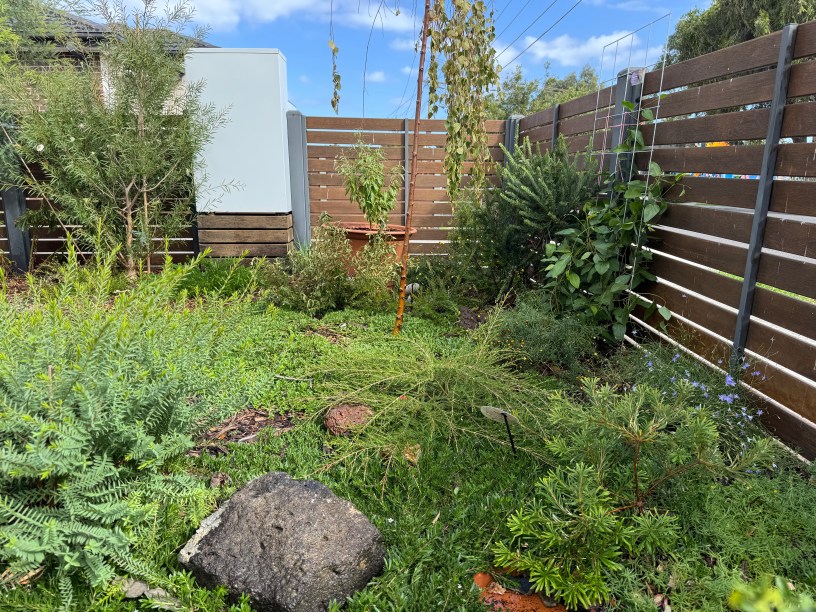
After many many years of saving for a deposit and starting to think I’d be renting for my whole life, my partner and I finally managed to take out a mortgage on our first home together in April 2024. Apart from the huge relief to no longer be at the whim of landlord’s increasing the rent or having to endure 3-6 monthly invasive ‘inspections’ by real estate agents, one of the huge sources of joy in buying our own home was that we would be able to grow our own garden at last!
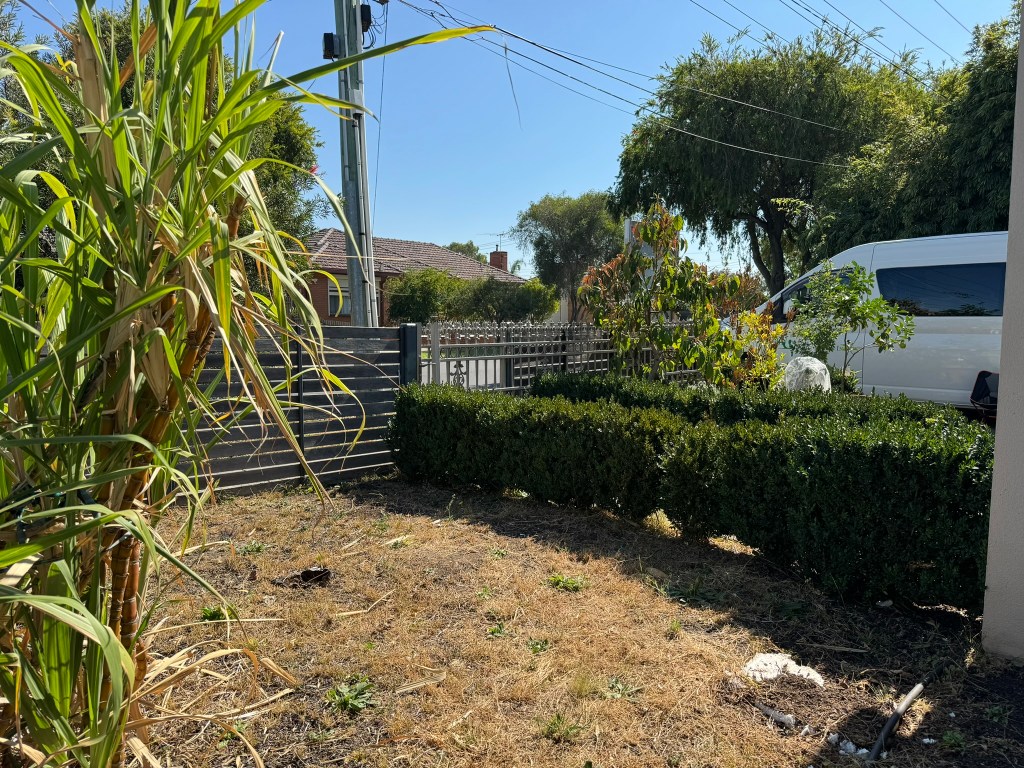
The house we bought is on Wurundjeri country, in Naarm, Melbourne’s western suburbs, which used to be volcanic plains full of grasslands and wildflowers. When we moved in, the small front garden, consisting of 2 rectangles of approximately 4 x 5 metres each, was mostly dying lawn, some boring hedge plants, sugar cane, a dying avocado sapling and a sad looking kalamansi tree.
My plan was to establish a mostly native garden, full of wildflowers, grasses, ground-covers and small shrubs to provide habitat for native birds, insects and other wildlife. I wanted to include some plants that are indigenous to this part of the land, but also some edible native plants and other flowering natives that I love (not necessarily indigenous to this area, but still from Australia). We also wanted to continue to have some non-native herbs and fruit trees, mostly in pots, and a few other exotic plants we have collected in pots over the years of renting, but the main focus would be establishing a native garden supplemented with a few non-native plants (mostly edible).
It is still very much a work in progress, and probably always will be, I doubt any gardener thinks that they have ‘enough’ plants! But I wanted to share the process we took and some progress photos, to show what can be achieved in a relatively small suburban garden. So many new townhouses and units like ours are being built with almost no garden, or just small boring patches of lawn (or worse, astro-turf), exotic/introduced plants, or occasionally native plants but usually not well chosen for the size of the garden, but if you want to convert it to a native garden I think it has so many benefits – obviously it attracts native pollinators and birds, and helps link up nature strips and other small patches of habitat into corridors. It also helps cool your home by having plants rather than paved concrete or bare lawns. And for me it brings so much joy observing the plants grow each day and seeing what insects and birds are visiting it.
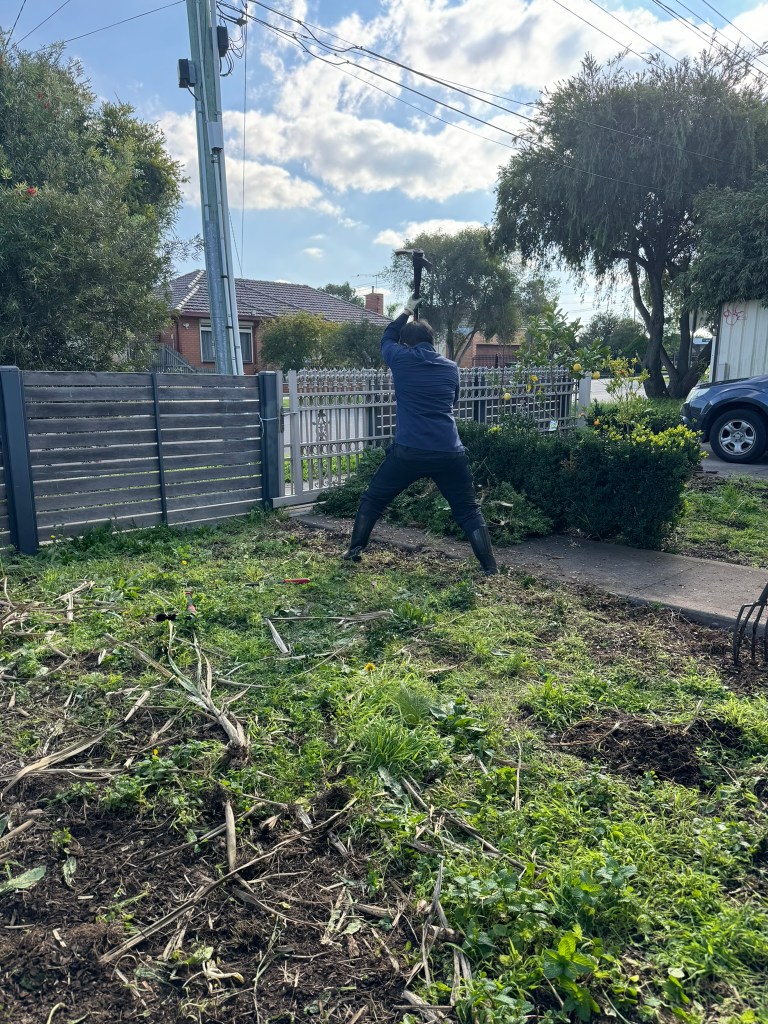
First, we dug out the grass, sugar cane, dying avocado sapling, and the boring hedge plants. The hedge plants were hard work to remove, required a lot of manual labour. Then we had a fairly ‘clean slate’, that we lay cardboard down over the earth, overlapping it as much as possible, then wetting down with water. This we then covered with 5-10cm of mulch. We ordered about 1 cubic metre of ‘bush mulch’ for each 4 x 5 metre section of our garden. This was delivered in a big pile on our driveway in May 2024 and we hand shovelled it to cover the cardboard. This is to try to suppress weeds and grass growing back.
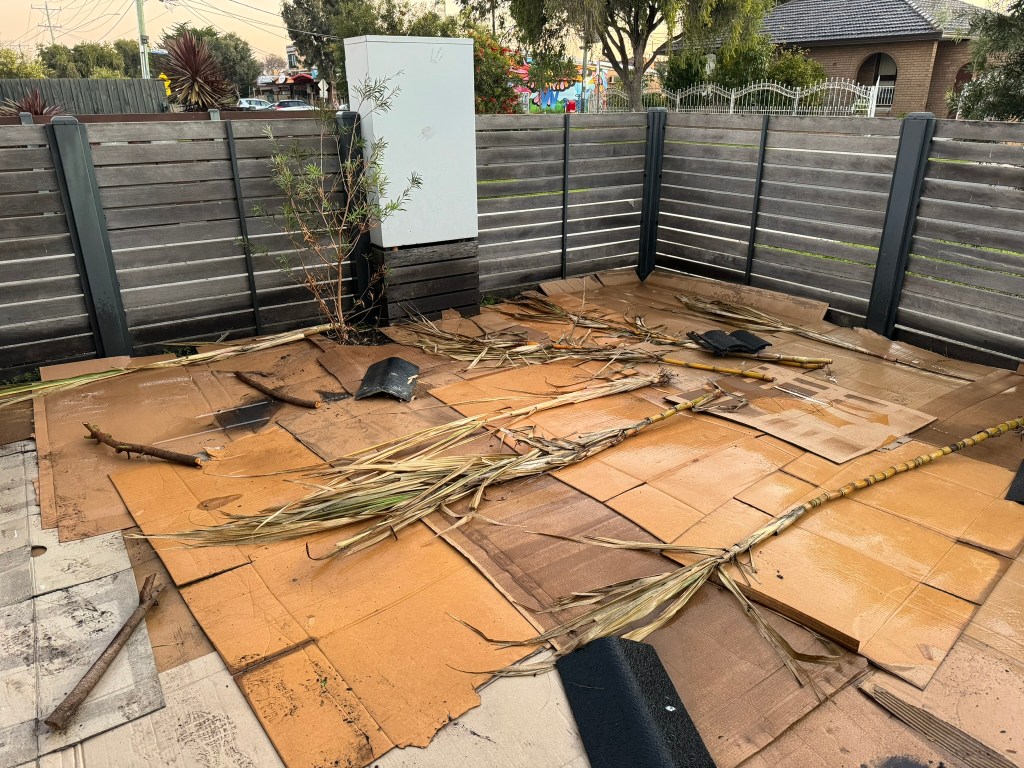
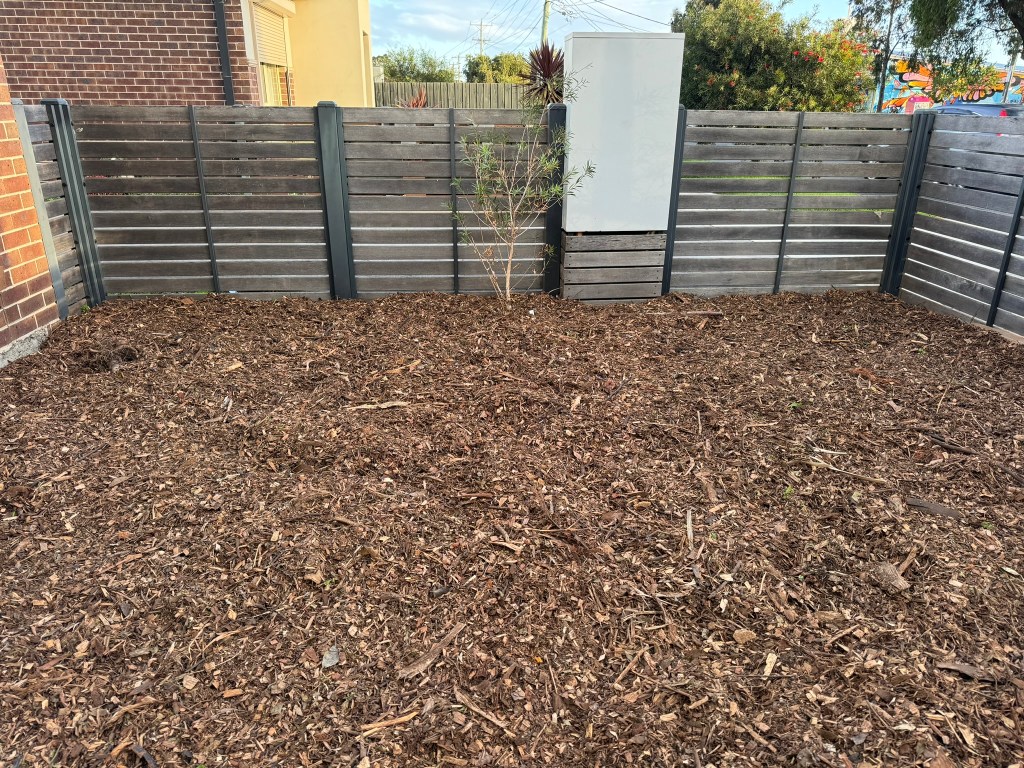
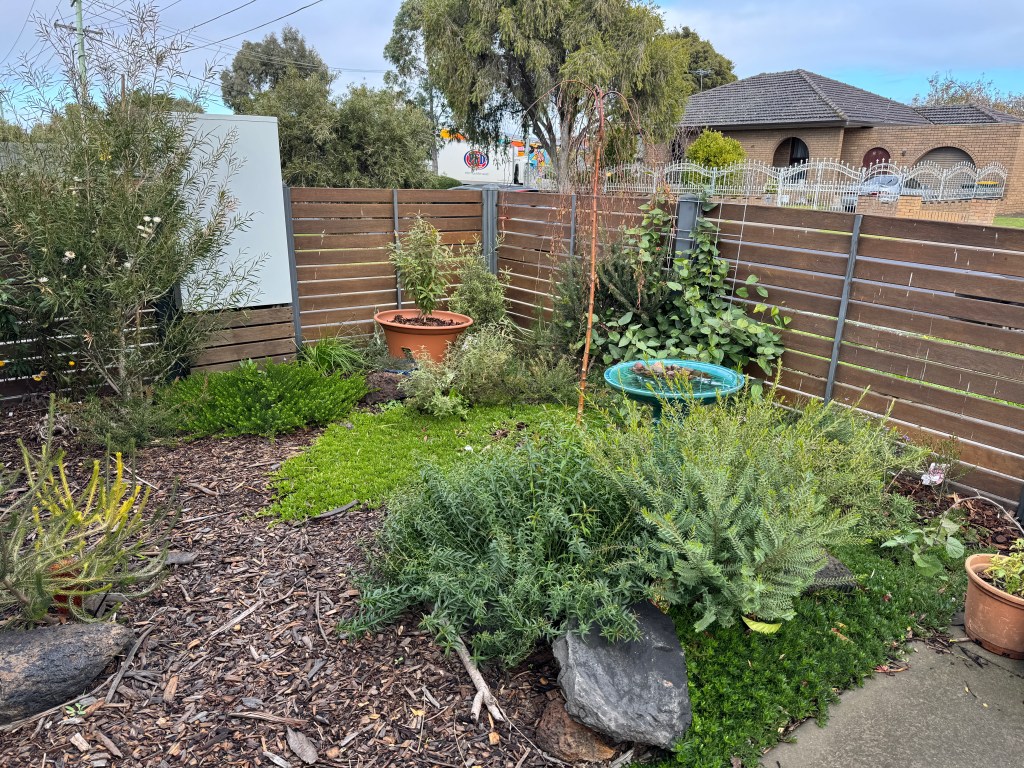
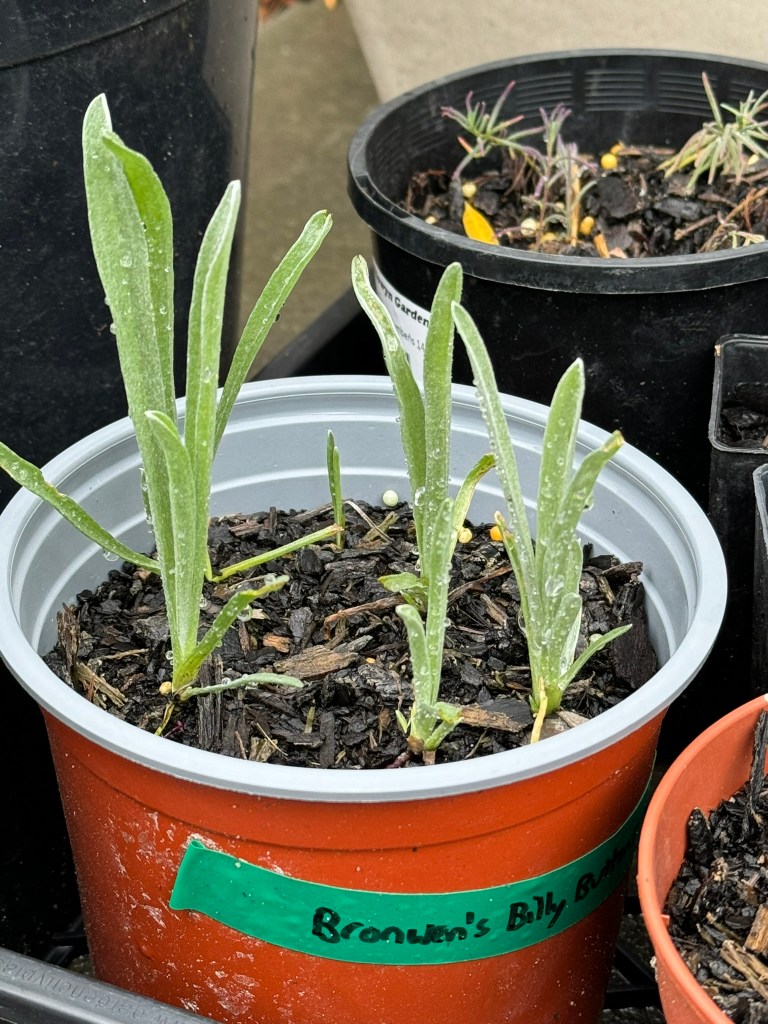
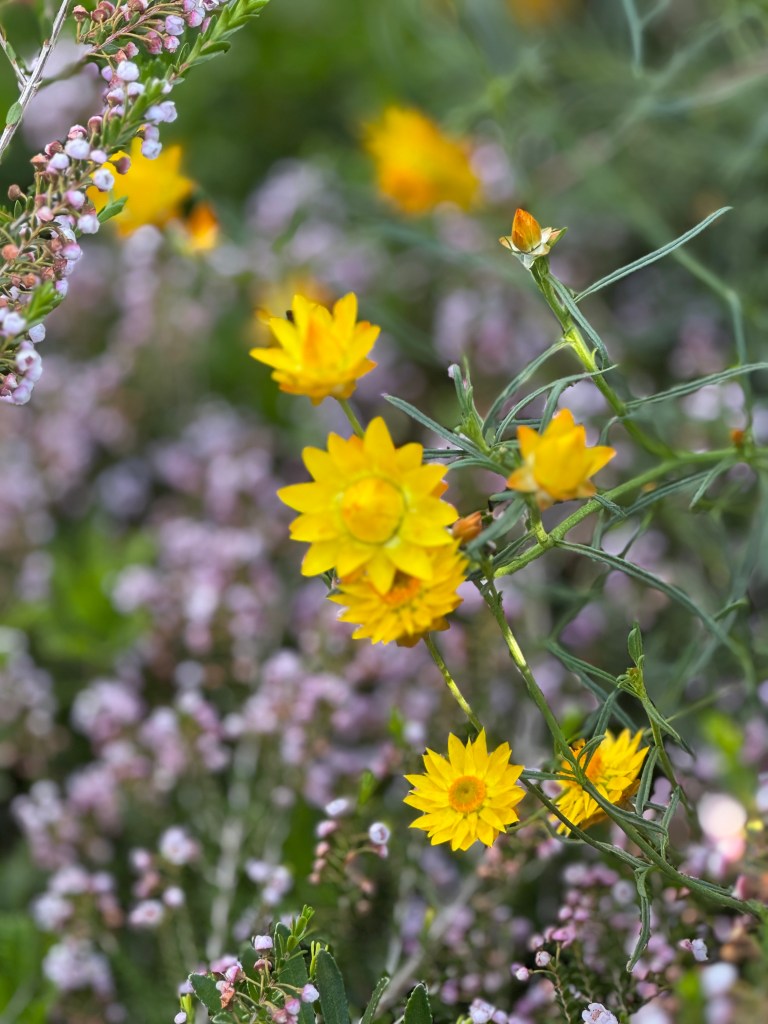
After this, we could start planting! Most of the plants we bought as tube-stock (very small plants) from the local Indigenous plant nursery in Newport Lakes, or from the ‘Friends of Cranbourne Gardens’ sale, but a few were bought as slightly bigger plants from other nurseries. Some plants we had been growing in pots for the last few years while renting. I also grew some things from cuttings, for example the now thriving creeping boobialla / myoporum ground cover was grown from cuttings from my friend Pierre’s garden, and other plants I grew from seed, like Billy Button wildflowers – first on my kitchen window sill in egg cartons, then transplanted to pots outside and then into the garden when they looked strong enough. We didn’t plant everything at once, but have slowly planted more things over time.
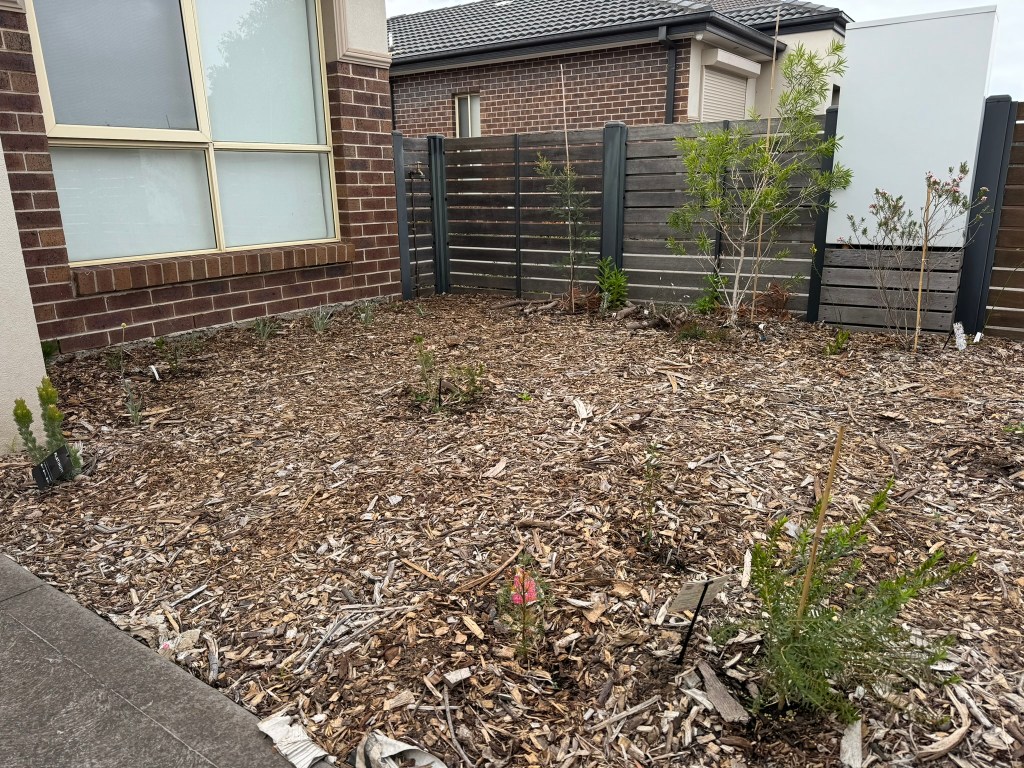
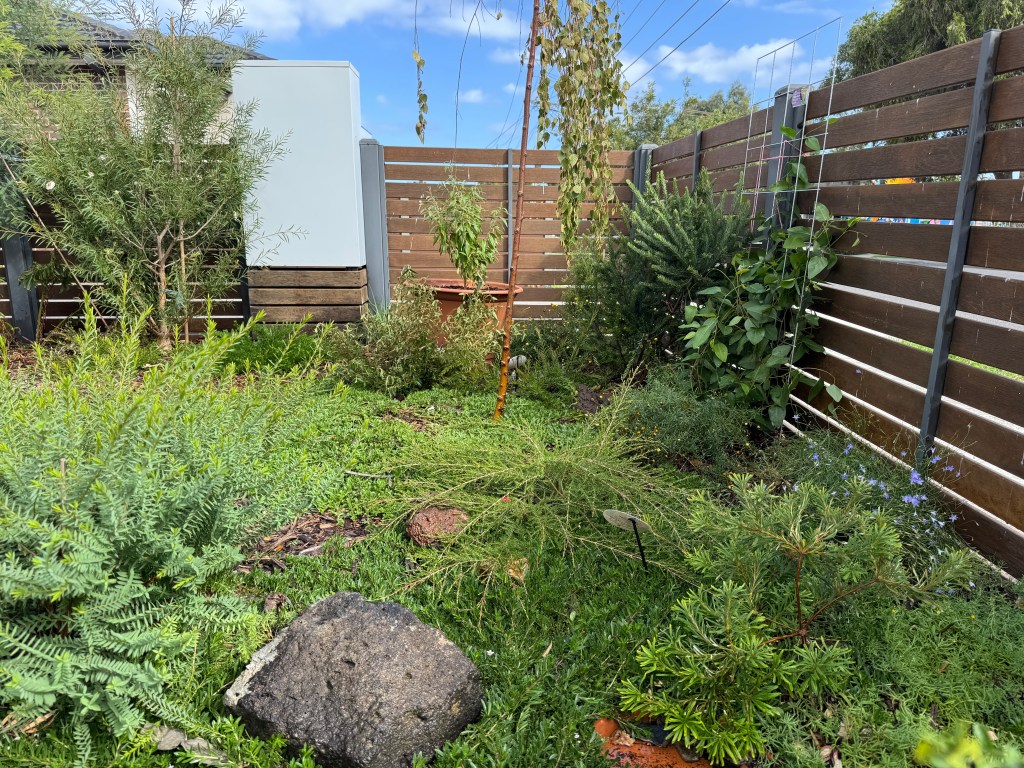

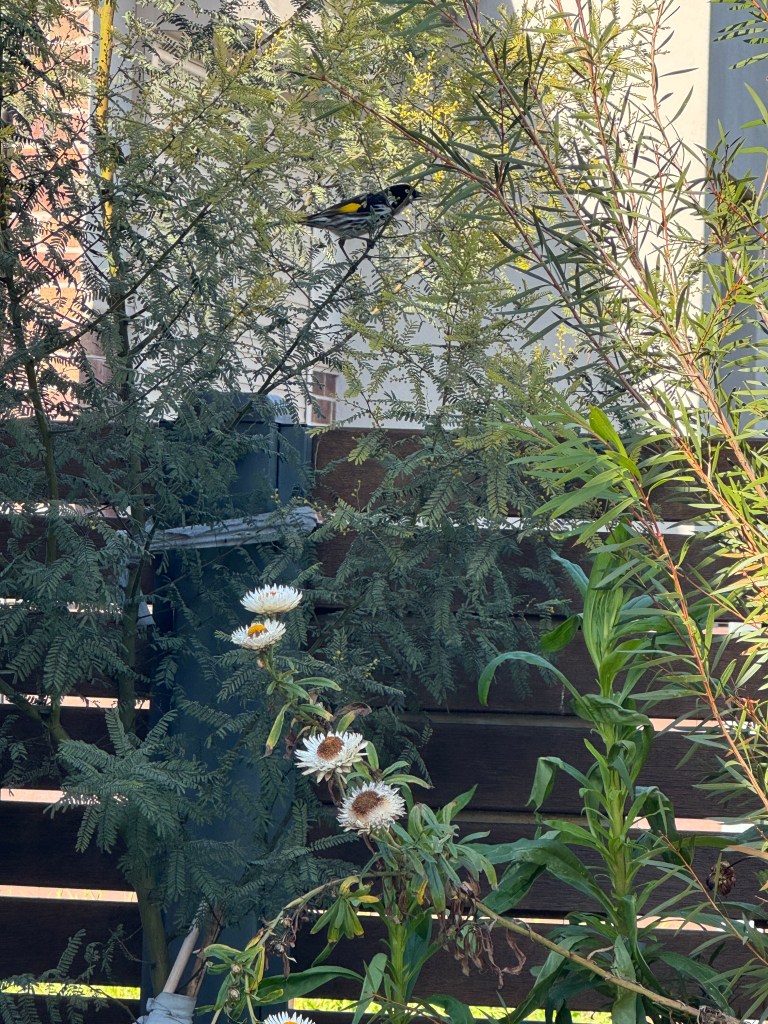
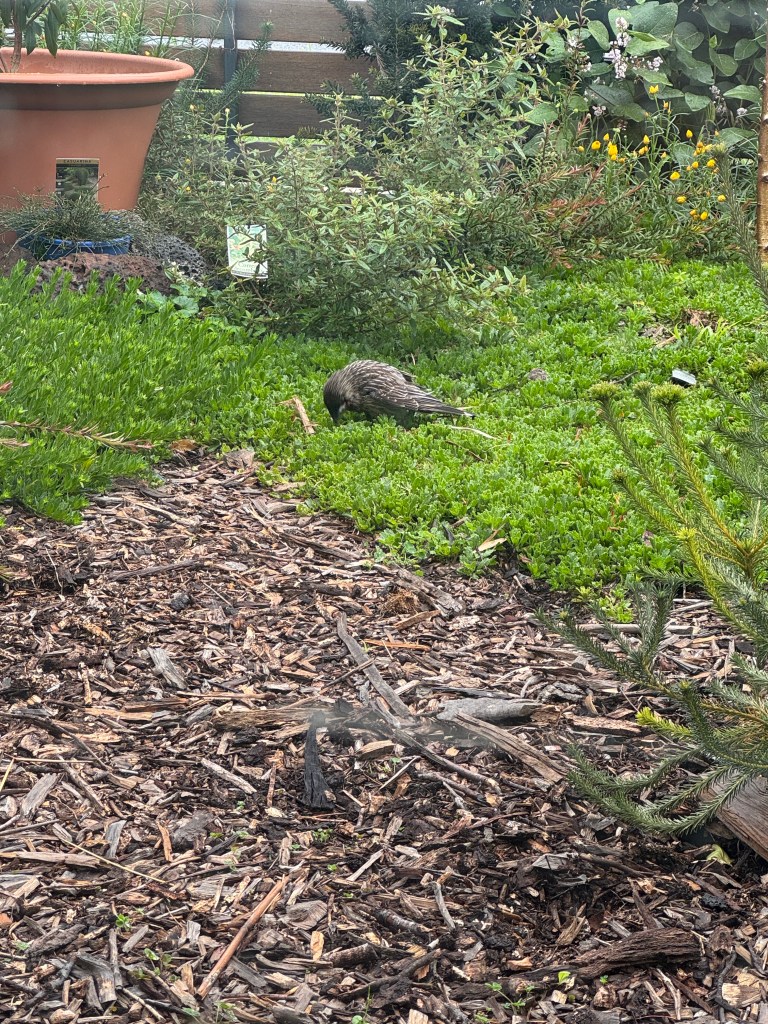
It has been just over a year now since we started establishing the garden. We have quite a good variety of native plants so even in winter there are some flowers for the pollinators. It is Spring 2025 now, and most of the plants are really thriving, covered in new growth and spring flowers. I have seen native insects such as native leaf cutter bees and many hoverflies, and new holland honey eaters frequently visit to use the water bath, and honeyeaters and wattlebirds have been visiting to drink nectar from the flowers, including the eremophila ground cover plants, correa shrubs, and the grevillea bushes. I can’t wait for the banksia, wattle and grevillea shrubs and trees to grow and provide more habitat and hopefully this will attract even more birds to the garden in the coming years. My dream is that one day blue wrens and spotted pardalotes will visit our garden.
 Happy Hobbit Life: Too many tabs open